back to back
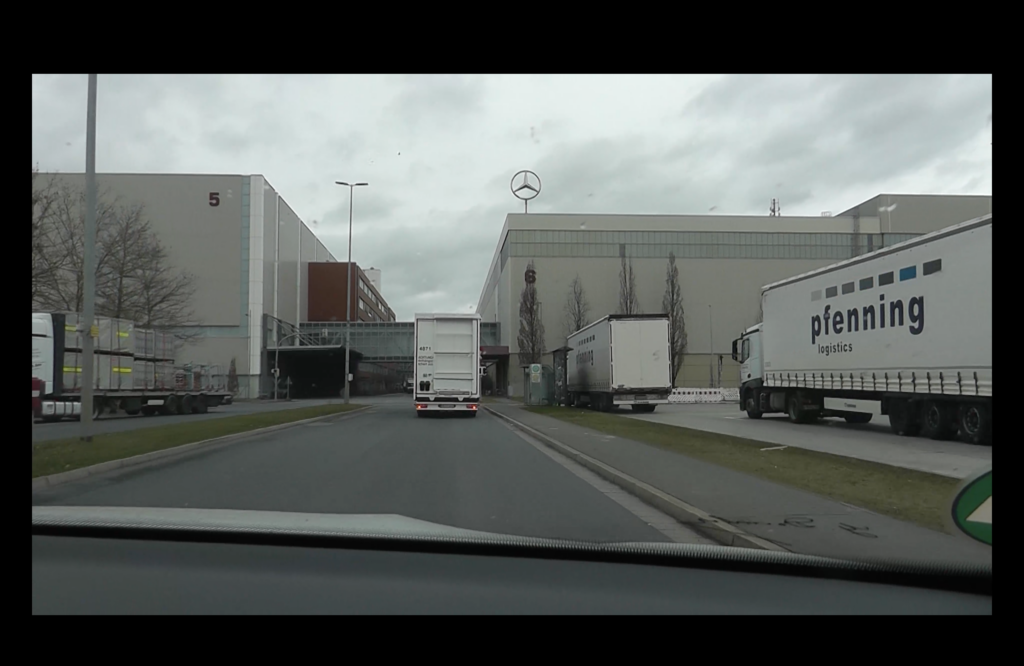
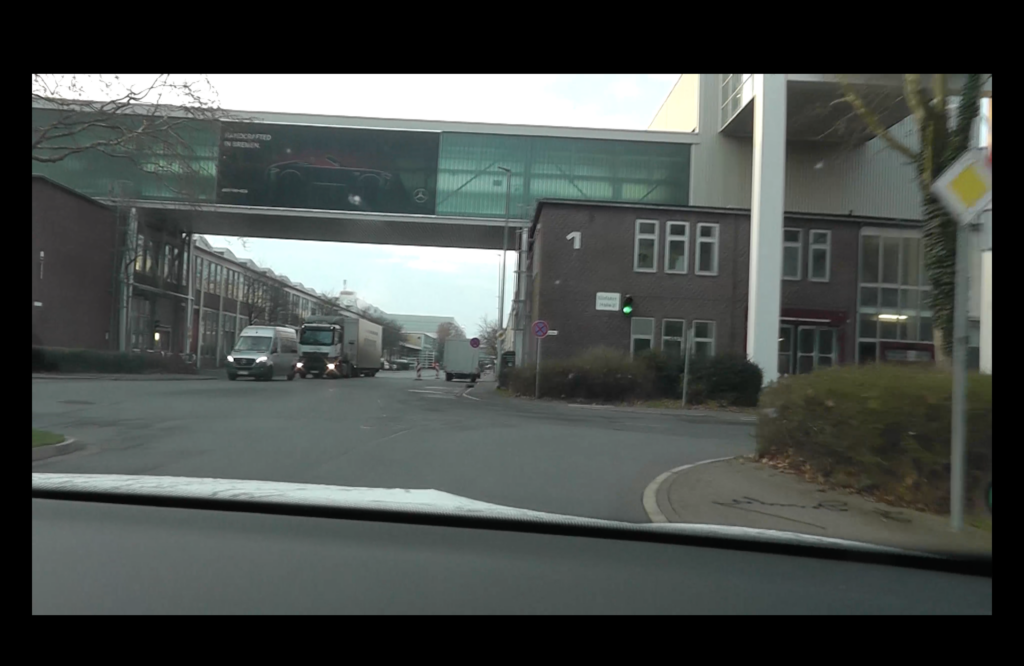
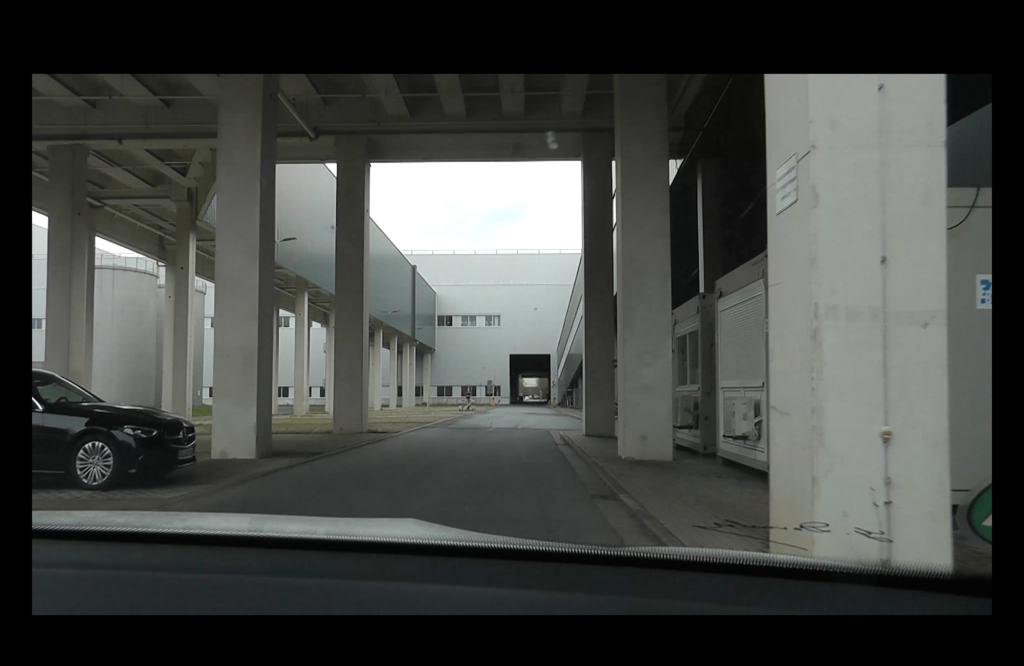
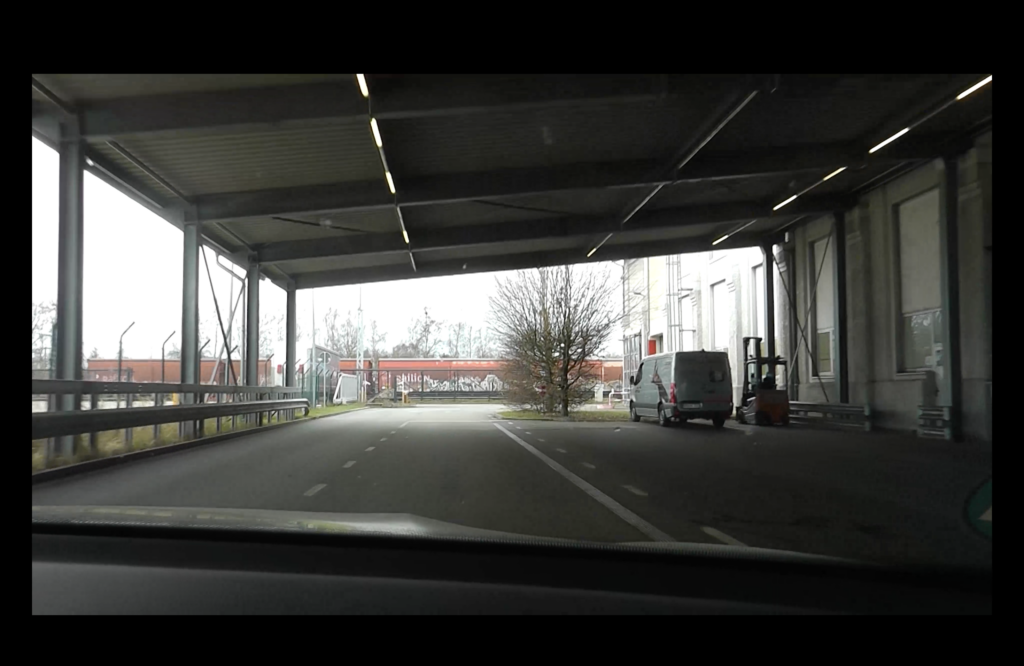
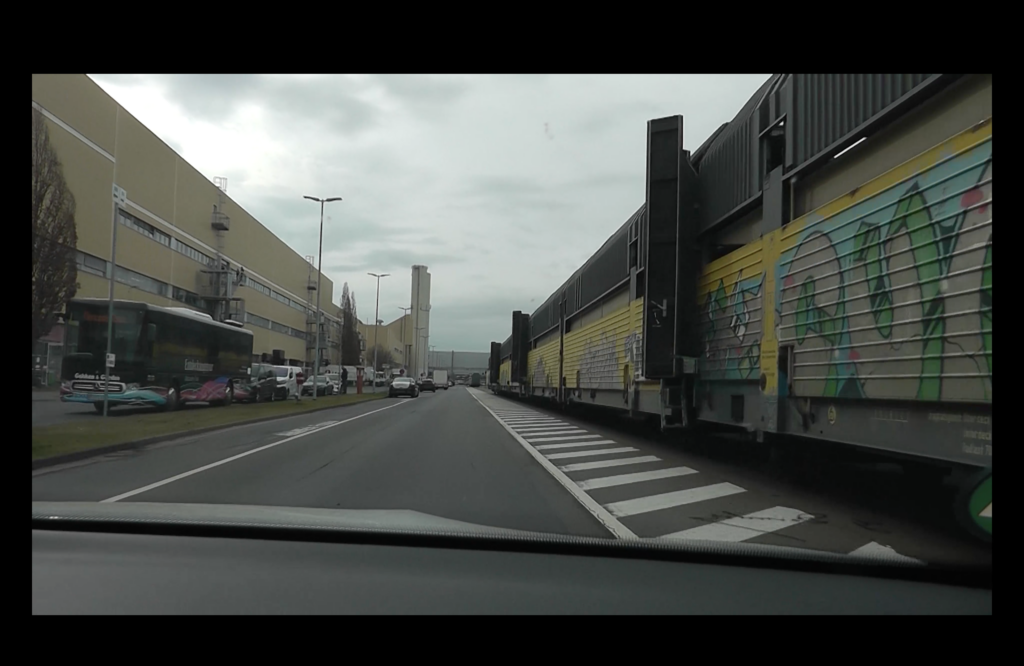
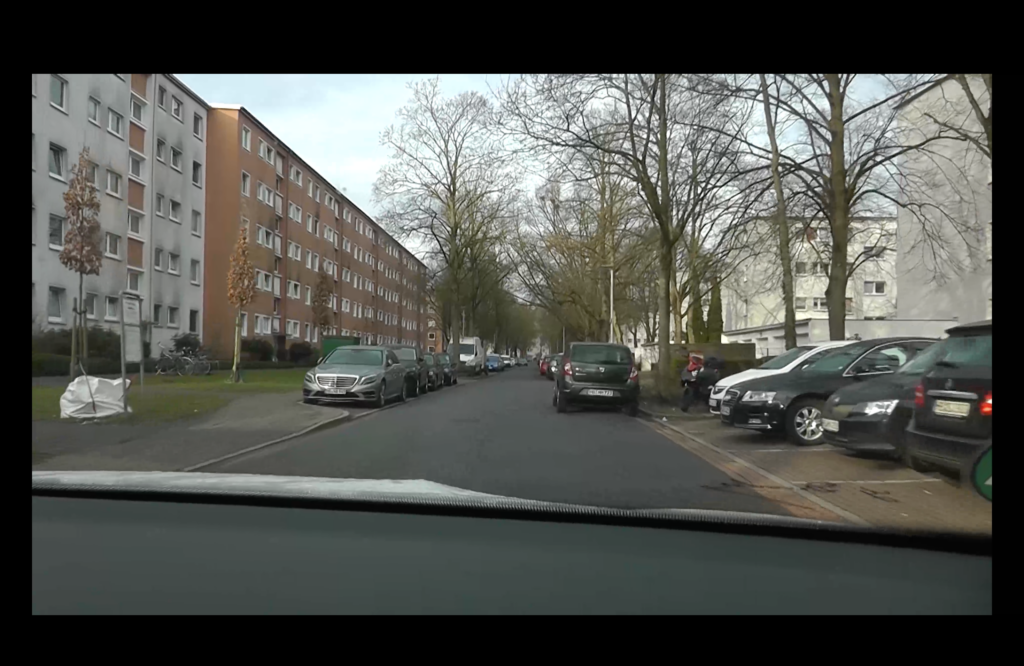
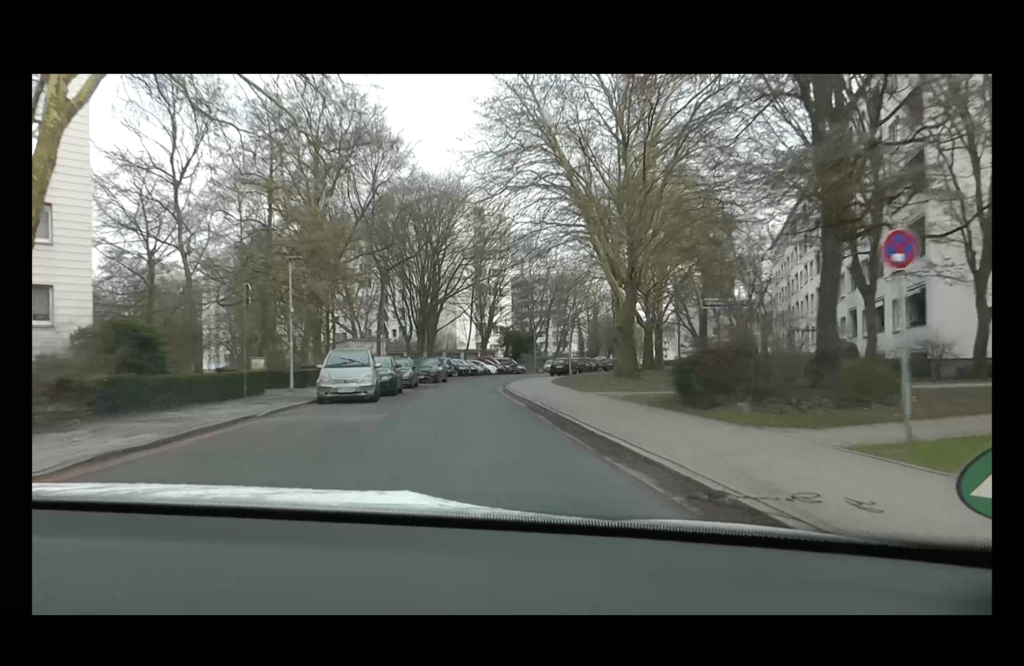
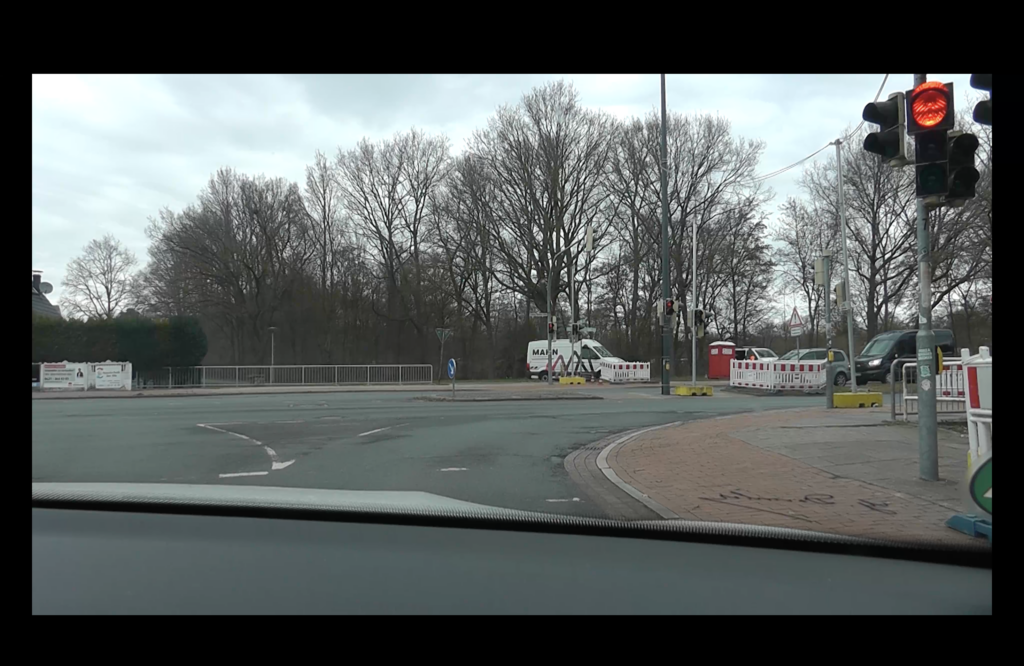
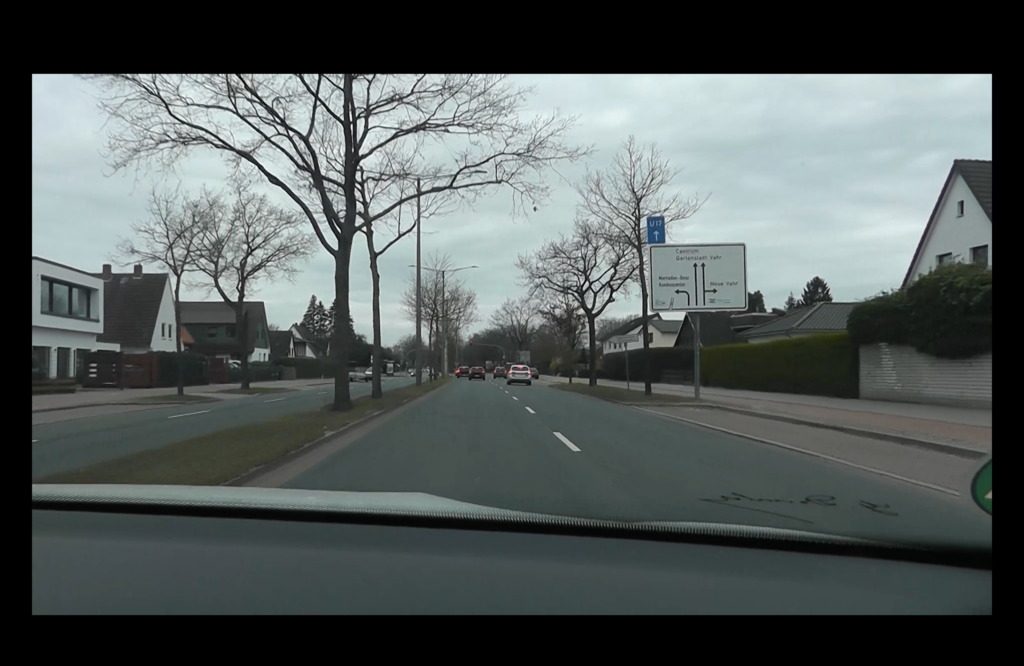
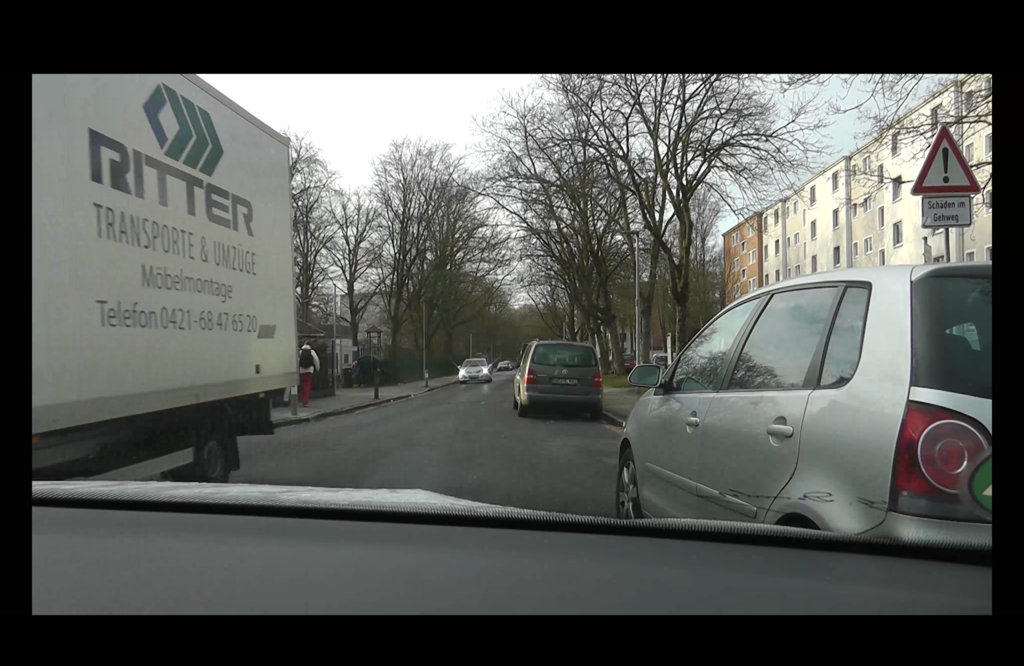
The video was created as part of a collaboration between Mercedes-Benz and Prof. Julika Rudelius. It features a tracking shot from inside a Mercedes. Following a clearly defined rhythm, the footage alternates between the grounds of the Mercedes plant in Bremen and the surrounding residential areas. The footage includes industrial buildings, access roads, parking lots, fences, and functional architecture, as well as streets, rows of houses, gardens, and the everyday infrastructure of residential areas. It is striking that both areas are formally very similar: clean lines, standardized construction methods, similar materials, and an overall sober, functional visual impression. People are scarcely visible in these images. Instead, the automobile directly or indirectly becomes the connecting element between the two spaces. It shapes not only the production site but also everyday life outside the plant, thereby structuring both areas in a similar way. Streets and residential areas resemble the plant’s access roads; parking areas are repeated; architectural structures appear interchangeable. Industry and residential life can no longer be clearly separated; rather, they appear as parts of the same system, characterized by efficiency, standardization, and repetition. Different places lose their distinctiveness and appear as variations of an overarching structure. This gives rise to a sense of alienation: People move through spaces that are used but not visibly designed. Urban space appears less as a social or cultural place and more as a functional framework oriented toward economic requirements.
Still images from the video are shown here. Length: 22:30 min.